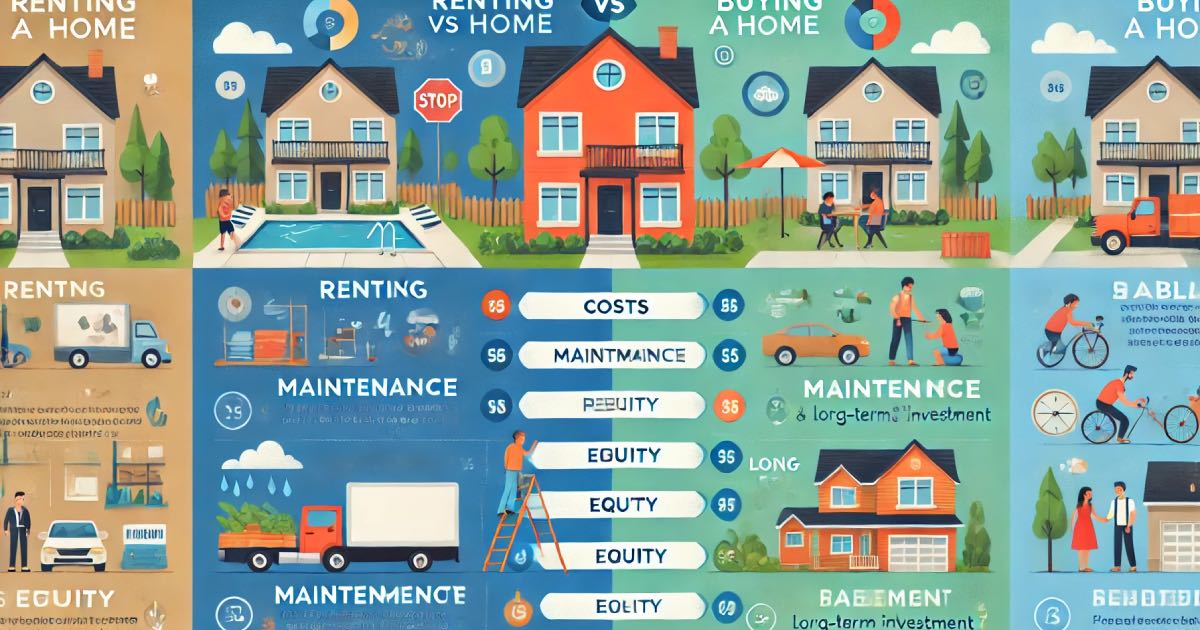
Renting a Home:
Pros:
- Flexibility:
Renting allows for easier relocation, making it ideal for individuals who move frequently for work or personal reasons. - Lower Initial Costs:
Typically requires a security deposit and the first month’s rent, which is significantly less than a down payment and closing costs for buying. - No Maintenance Responsibility:
Landlords generally handle repairs, maintenance, and property upkeep. - Access to Amenities:
Many rental properties offer shared amenities like gyms, pools, or concierge services without additional costs. - Less Financial Risk:
Renters are not exposed to market fluctuations in property values.
Cons:
- No Equity Building:
Monthly rent payments do not contribute to ownership, meaning no return on investment. - Limited Control:
Renters may face restrictions on renovations, pet ownership, or personalization of the space. - Potential for Rising Costs:
Rent increases can outpace income growth, creating financial strain. - Lack of Stability:
Landlords may choose not to renew leases or sell the property, forcing renters to move unexpectedly.
Buying a Home:
Pros:
- Equity and Investment:
Monthly mortgage payments contribute to ownership, building equity over time. - Stability:
Homeownership provides a sense of permanence, with no landlord interference or unexpected lease terminations. - Creative Freedom:
Owners can renovate, decorate, and landscape to match personal tastes. - Potential for Appreciation:
Over time, property values often increase, providing financial gains if the home is sold. - Tax Benefits:
Homeowners may deduct mortgage interest and property taxes from their taxable income in some regions.
Cons:
- High Initial Costs:
Buying requires a significant down payment, closing costs, and other upfront expenses. - Ongoing Maintenance Costs:
Homeowners are responsible for repairs, maintenance, and property improvements. - Less Flexibility:
Selling a home can be time-consuming and costly, making it harder to move quickly. - Market Risk:
Property values can decline, potentially leading to financial losses. - Additional Expenses:
Costs like property taxes, homeowners insurance, and homeowners association (HOA) fees can add up.
Key Considerations:
- Financial Situation: Can you afford the upfront and ongoing costs of homeownership?
- Lifestyle Preferences: Do you value flexibility, or are you seeking stability?
- Long-Term Plans: Are you planning to stay in one location for several years?
- Market Conditions: Is it a buyer’s or renter’s market in your area?
By weighing these factors, individuals can determine which option best aligns with their financial goals, lifestyle, and future plans.